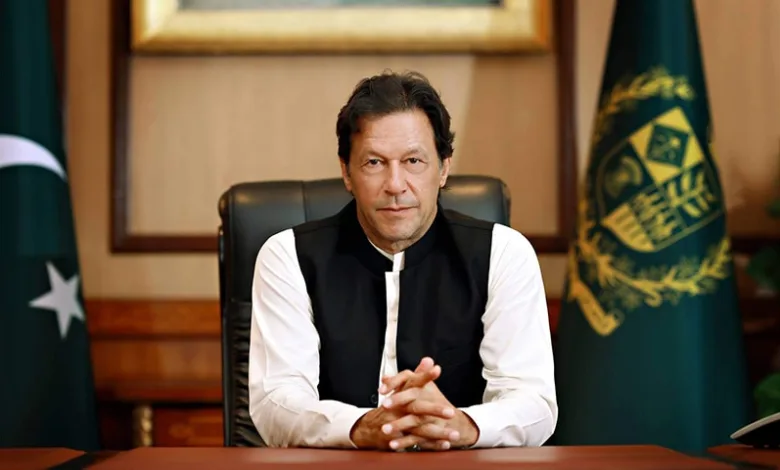
Imran Khan Addresses Saifur Code Controversy — full coverage and analysis on Nai Khabar. Below we break down the key facts and what this development means.
Chairman Imran Khan of Pakistan Tehreek-e-Insaf (PTI) stated that the Saifur Rehman never goes outside the Ministry of Foreign Affairs and that the country’s diplomatic codes have always been secure.
In a speech on social media, he mentioned that he is currently being investigated regarding the issue of the Central Intelligence Agency (CIA). He asserted that he is fully prepared for any potential arrest but is unaware of what the CIA wants to inquire about.
He further explained, “Saifur is a confidential message, and it is essential to keep it secret. Once the code is exposed, all diplomatic messages will be leaked, just like the Wikileaks incident where American secrets were disclosed.”
Imran Khan emphasized the significance of understanding the core matter of whether he leaked the Saifur code or not.

He clarified, “Saifur never reaches anyone else. It is conveyed to us only through writing in its own words. It is neither stolen nor seen by anyone else. It solely remains within the Ministry of Foreign Affairs. It never goes outside, so there is no question of it getting lost or going to the Prime Minister or any other officer. The Saifur code has never been made public, including the Prime Minister’s. We only received a message about a conversation between Asad Majid and Donald Lon.”
Regarding the Saifur message, Imran Khan said, “When it came to me, we exercised great caution and decided not to make it public due to ISI’s conference.”
He expressed his confusion, saying, “I don’t understand what the ISI wants. Saifur is secure, as Rana Sanaullah stated, and it remains within the Ministry of Foreign Affairs.”
Imran Khan claims there’s a US conspiracy against him. Why do so many Pakistanis believe him?
Since his tenure as Pakistan’s Prime Minister, Imran Khan has consistently claimed the existence of a US conspiracy against him. While some dismiss these allegations as political rhetoric, it is intriguing to observe that a substantial portion of Pakistanis seems to believe him. In this article, we delve into the reasons behind this prevailing belief and explore the factors that contribute to the perception of a US conspiracy against the former Prime Minister.
Saifur Code Controversy Historical Context of US-Pakistan Relations:
One of the key factors shaping this belief is the historical context of US-Pakistan relations. Over the years, Pakistan has witnessed instances of strained ties with the United States, often rooted in disagreements over regional policies, security concerns, and nuclear proliferation. Past incidents, including the suspension of aid and military assistance, have contributed to a sense of mistrust towards the US government, making some Pakistanis more susceptible to accepting claims of a conspiracy against their leaders.
Geopolitical Dynamics and Global Power Play:
Geopolitical dynamics and the pursuit of national interests are complex and ever-changing. In this context, conspiracy theories can thrive, especially when it comes to influential global players like the United States. The US has historically intervened in various countries’ internal affairs for strategic reasons, leading to suspicions that it might also be influencing Pakistan’s political landscape. These suspicions are amplified when high-profile leaders like Imran Khan voice their concerns, resonating with segments of the population who harbor anti-American sentiments.
Media Narratives and Political Messaging:
Media plays a crucial role in shaping public opinion. In Pakistan, where media freedom and diversity of views exist, the narratives presented by different media outlets can significantly influence public perception. When a prominent leader accuses a foreign power of conspiracy, media outlets with pro-government leanings may amplify and support these claims, validating them in the eyes of their viewers. This reinforcement further fuels the belief in a US conspiracy against Imran Khan, especially among his supporters.
Domestic Political Landscape:
Within Pakistan’s domestic political landscape, polarization is not uncommon. Supporters of various political parties often hold strong, contrasting opinions. When Imran Khan, a charismatic and influential figure, accuses the US of conspiring against him, his supporters may rally behind him, considering it an attempt to undermine his government. At the same time, his political opponents may dismiss these claims as mere diversion tactics, leading to a further divide among the populace.
Public Perception of US Foreign Policy:
Public perception of US foreign policy can influence how conspiracy theories are received and accepted. Certain US foreign policy decisions have been viewed unfavorably by some Pakistanis, leading them to be more receptive to narratives that portray the US as an external meddler in their country’s affairs. The popular notion that the US seeks to exert control over other nations for its interests provides fertile ground for conspiracy theories to take root.
The belief in a US conspiracy against Imran Khan, Pakistan’s ex-Prime Minister, is a complex amalgamation of historical events, geopolitical dynamics, media narratives, domestic politics, and public perception of US foreign policy. While conspiracy theories should always be critically examined, understanding the underlying reasons for this belief sheds light on the complexities of politics and the influence of international relations on public sentiment. As political landscapes and global dynamics continue to evolve, it remains crucial to approach such narratives with a discerning and open mind.
Related Stories on Nai Khabar
Related Stories
 The Fall of Assad Regime: A 50-Year Journey from Power to DefeatDecember 8, 2024
 Breaking News: 7.5 Magnitude Quake Hits Western JapanJanuary 1, 2024
 Mushaal lauds PM for raising voice for oppressed Kashmiris at UNGASeptember 25, 2023