Hazara Express Train Accident : 22 People Died
Hazara Express Train Accident : 22 People Died — full coverage and analysis on Nai Khabar. Below we break down the key facts and what this development means.
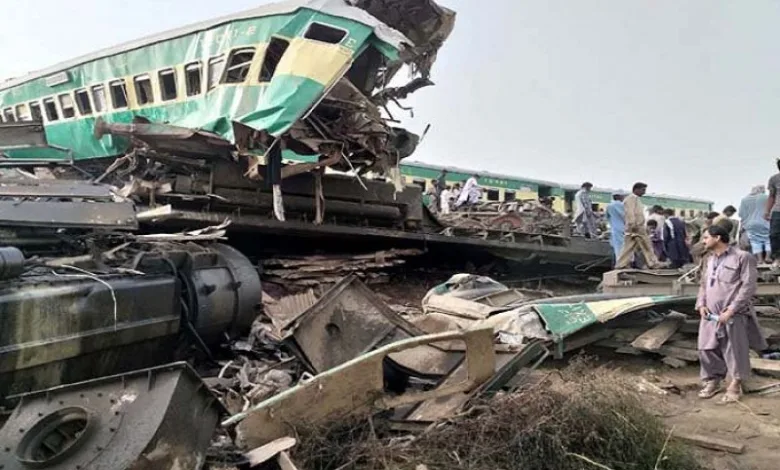
According to railway officials, Hazara Express coming from Karachi met with an accident near Sargodha railway station, in which several bogies of Hazara Express derailed. DS Railway Mahmood Al-Rahman said that there are reports of 10 bogies derailing near Nawabshah, and information is being gathered in this regard.
Relief Efforts
DS Railway Mahmood Al-Rahman said that the relief train from Loco Shed Rohri is on its way to the accident site, and the traffic on the up track is suspended due to the accident. Railway officials said that the causes of the accident could not be known yet, while local police said that the passengers on board Hazara Express are being evacuated from the bogies.
The passengers on board Hazara Express said that there were a lot of passengers on board Hazara Express and emergency has been imposed in nearby hospitals due to the train accident, while the injured are being shifted to Peoples Medical Hospital.
Local sources said that more than 40 people were injured in the train accident and there is also a fear of deaths in the accident, while SSP Sanghar Abid Baloch confirmed the death of five people in the accident and said that efforts are being made to rescue the people trapped in the bogies. 10 SHOs, 4 DSPs and more than 100 police personnel are busy in rescue work.
On the direction of DG Rangers Sindh Major General Azhar Waqas, Rangers personnel have also reached the spot.
Hazara Express Train Accident Casualties
On the other hand, a report by state TV said that 15 people have been killed and more than 40 injured in the accident involving Hazara Express. Later, DIG Shaheed Benazirabad told Geo News that the number of people killed in Hazara Express train accident has reached 22, 9 out of 10 bogies have been cleared, and there are still injured trapped inside the bogies who are being rescued.
Train accidents are unfortunately not uncommon in Pakistan. According to data from Pakistan Railways, there were 757 train accidents between 2012 and 2017, which is an average of about 125 incidents per year Most of these accidents were caused by derailment and collisions at unmanned railway crossings The railways are an essential mode of travel in Pakistan, especially among middle and lower income groups, with tracks spanning the length and breadth of the country. However, carriages are often overcrowded and many of the trains are in poor condition
According to the authorities, the three major causes of train accidents in Pakistan are lack of track maintenance, signal issues, and older engines1. Casualty figures are often high because trains are packed with far greater numbers of passengers than they were designed for Railway accidents are not uncommon in Pakistan, often caused by derailment and collisions at unmanned railway crossings. The railways are an essential mode of travel, especially among middle and lower income groups, with tracks spanning the length and breadth of Pakistan
There are several measures that can be taken to improve railway safety. Some of these measures include:
- Maintaining and modernizing infrastructure and equipment: This includes regular maintenance of tracks, trains, and other equipment to ensure they are in good condition and meet safety standards1.
- Rigorously training employees and improving operations: This involves providing training for railway staff to ensure they are knowledgeable about safety procedures and can operate trains and equipment safely1.
- Developing and deploying technology: This includes using technology such as sensors, cameras, and automated systems to monitor trains and tracks, detect potential problems, and prevent accidents1.
- Safeguarding communities and supporting first responders: This involves working with local communities and first responders to ensure they are prepared to respond to emergencies and accidents on the railways1.
- Monitoring and protecting physical and digital networks: This includes monitoring the railway network for potential safety hazards, as well as protecting against cyber threats that could disrupt railway operations1.
Related Stories on Nai Khabar
Related Stories
 Shahbaz Sharif accuses Caretaker PM of being Imran Khan’s relativeNovember 20, 2023
 Sports, Live Cricket, Formula 1, Today IPL MatchAugust 2, 2023
 Prince Rahim Aga Khan Reveals 1 Dazzling IT ParkJune 8, 2024