Higher Education Delegation from the UK Visits Pakistan — updated ranking and admissions guide for Pakistani students and parents. Compare top universities, fee structures, merit requirements, and career outcomes to make an informed 2026 admission decision.
UK Higher Education Delegation in Pakistan: Strengthening Academic Ties
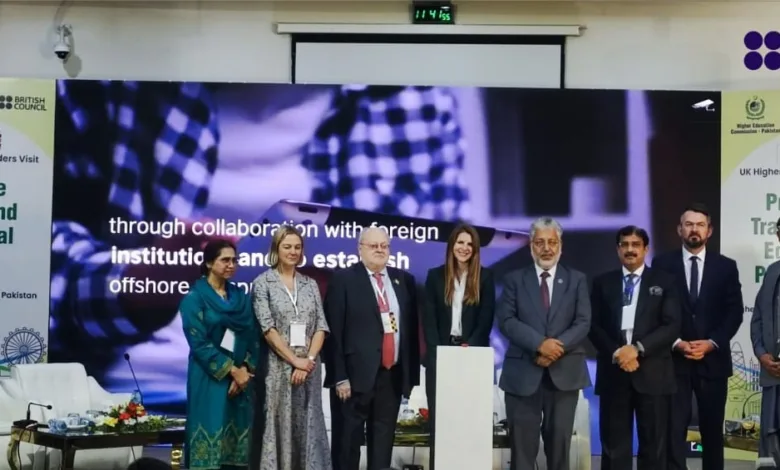
23 April, Islamabad, Pakistan – The UK Higher Education Delegation in Pakistan, led by the UK Government’s International Education Champion Sir Steve Smith, has embarked on a transformative five-day visit. The aim is to forge sustainable academic partnerships and elevate collaborative ties between the UK and Pakistani institutions beyond traditional student recruitment models.
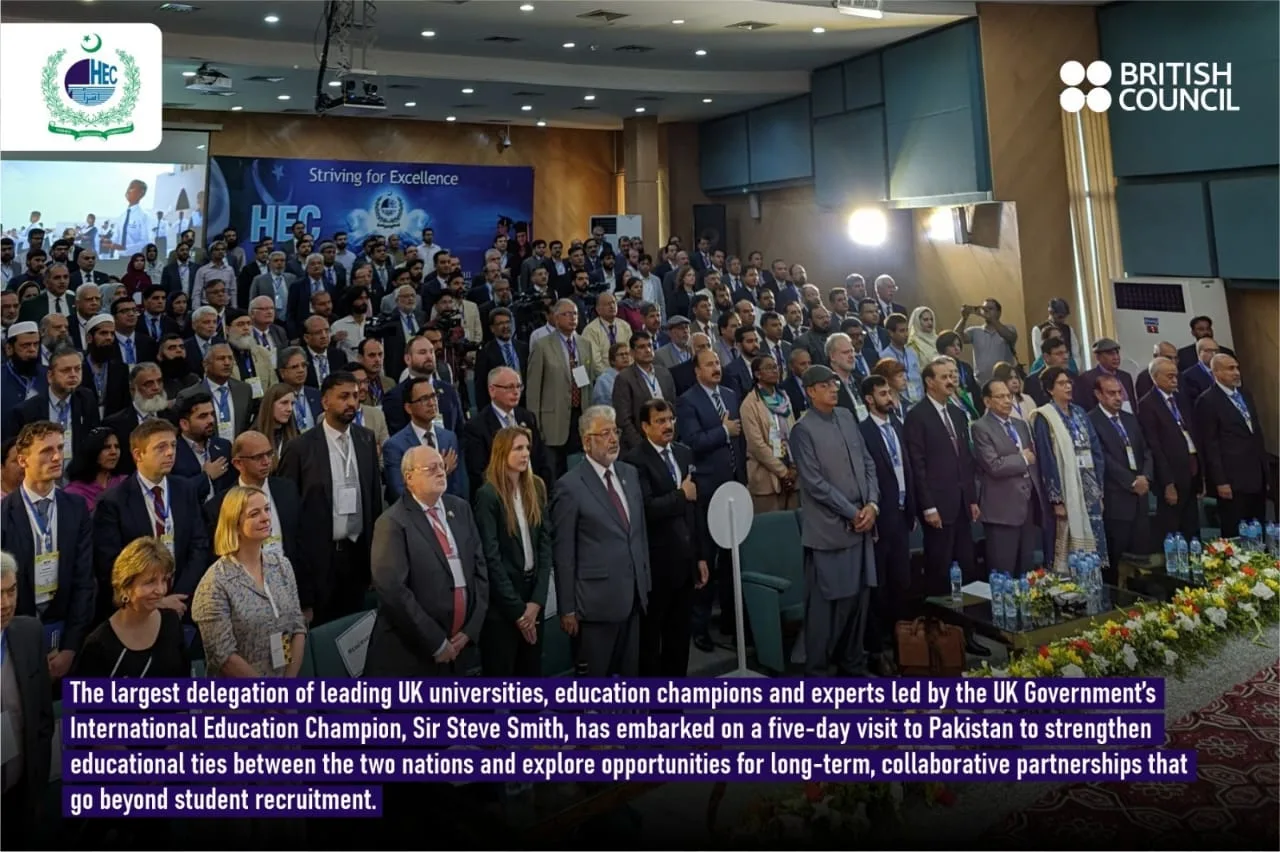
Overview of the UK Higher Education Delegation in Pakistan
This visit marks the UK’s strongest educational outreach in Pakistan to date. Organized by the Higher Education Commission of Pakistan, the British High Commission, and the British Council, alongside the UK’s Department for Business and Trade (DBT) and the Department for Education (DfE), the mission is part of a broader vision to redefine international higher education relationships.
Objectives of the UK Higher Education Delegation in Pakistan
The core goal of the UK Higher Education Delegation in Pakistan is to create mutually beneficial academic frameworks. The delegation will focus on:
Transnational Education (TNE)
Joint Research Initiatives
Faculty Development and Academic Capacity Building
These areas are pivotal to ensuring educational equity, innovation, and the long-term success of higher education systems in both countries.
Key Meetings and Collaborations by the UK Higher Education Delegation in Pakistan
During their stay, the UK delegation will engage with a wide spectrum of stakeholders including:
Leading Pakistani universities
Senior officials from the Federal Government
Higher Education Commission (HEC) of Pakistan
Education policy leaders and experts
Such interactions are designed to lay the groundwork for joint degree programs, research exchanges, and institutional collaborations.
Transnational Education and Joint Research Goals
A major focus for the UK Higher Education Delegation in Pakistan is to develop Transnational Education (TNE) programs. These enable Pakistani students to gain UK qualifications without leaving the country, reducing barriers while promoting academic mobility.
Joint research projects in science, technology, healthcare, and climate are also being explored, promoting innovation that serves global needs.
Faculty Development and Student Mobility Initiatives
The visit prioritizes faculty exchange, curriculum development, and student mobility. These efforts are vital for enhancing academic standards and exposing both students and educators to global perspectives and skills.
Statements from Leaders on the UK Higher Education Delegation in Pakistan
Remarks by Dr. Khalid Maqbool Siddiqui and Sir Steve Smith
Dr. Khalid Maqbool Siddiqui, Pakistan’s Minister for Federal Education and Professional Training, praised the initiative:
“The Government of Pakistan is dedicated to transforming higher education through research, innovation, and partnerships that directly impact society.”
Sir Steve Smith shared his excitement:
“Pakistan’s dynamic higher education sector offers immense potential. We’re here to build impactful partnerships that last well beyond this visit.”
Comments from British High Commissioner and HEC Chairman
Jane Marriott, British High Commissioner to Pakistan, emphasized continuity:
“The UK and Pakistan share a deep educational bond. This visit reflects our commitment to fostering a future-ready generation through academic collaboration.”
Dr. Mukhtar Ahmed, HEC Chairman, echoed the strategic importance:
“This delegation marks a turning point in our relationship. It promotes access to quality education, credit transfer systems, and mobility pathways that benefit both countries.”
Strategic Outcomes of the UK Higher Education Delegation in Pakistan
This visit is expected to lead to the signing of multiple memorandums of understanding (MoUs), co-funded research grants, and the launch of dual-degree initiatives. The groundwork laid by this delegation has the potential to reshape Pakistan’s higher education landscape.
Role of the Pakistan UK Education Gateway in Strengthening Partnerships
The Pakistan UK Education Gateway, launched in 2018, has been instrumental in bridging educational institutions between the two nations. Jointly funded by the Government of Pakistan and the British Council, it continues to support faculty collaboration, mobility programs, and policy dialogues – all highlighted in this visit.
Related Stories on Nai Khabar
Frequently Asked Questions
What are the top universities in Pakistan for 2026?
Pakistan’s top universities include Quaid-i-Azam University, LUMS, NUST, UET Lahore, FAST-NUCES, IBA Karachi, and Aga Khan University Medical College. Rankings and specializations are in the article above.
How do admission merit requirements work?
Pakistani university admissions combine HSSC/equivalent marks, entrance test scores (NET for NUST, SAT for LUMS, MDCAT for medical), interviews, and quota allocations. Each institution sets its own merit formula.
What are the fee structures at Pakistani universities?
Public universities charge Rs 30,000-200,000/year while top private universities (LUMS, IBA) range Rs 500,000-1,500,000/year. Need-based scholarships are widely available.
Related Stories

 Pakistan: Govt Slashes Petrol Price by Rs 40October 16, 2023
 Mushaal lauds PM for raising voice for oppressed Kashmiris at UNGASeptember 25, 2023