Karakoram Highway Restored for All Traffic after Heavy Rain — full coverage and analysis on Nai Khabar. Below we break down the key facts and what this development means.
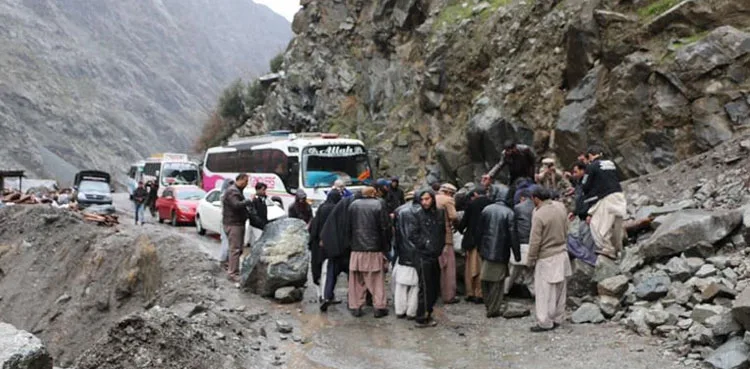
The Karakoram Highway (KKH), the world’s highest paved international road, has been restored for all traffic after being blocked by landslides and floods caused by heavy rain in different parts of the country.
The KKH connects Pakistan with China through the Khunjerab Pass, and is also a vital link for the people of Gilgit-Baltistan and Khyber Pakhtunkhwa. The road was hit by landslides in Raikot, Sumer Nallah and other points due to the torrential downpours that have been battering the country for the past few days12.
The Frontier Works Organization (FWO), the engineering branch of the Pakistan Army, worked tirelessly to clear the debris and restore the traffic flow on the KKH. The FWO also restored the traffic between Gilgit and Skardu, which was blocked due to landslides at Dhee near Zero Point in Khunjerab1.
The restoration of the KKH has brought relief to the passengers and commuters who were stranded on both sides of the road. The KKH is not only a strategic asset for Pakistan and China, but also a source of livelihood and tourism for the local people.
The KKH is also known as the China-Pakistan Friendship Highway, as it symbolizes the strong bilateral ties between the two countries. The road was built with the joint efforts of Pakistan and China from 1959 to 1979, and was upgraded in 2013 under the China-Pakistan Economic Corridor (CPEC) project.
The KKH is prone to natural disasters such as landslides, avalanches, earthquakes and floods, which often disrupt its smooth functioning. However, the FWO and other relevant authorities are always ready to respond to any emergency situation and ensure the safety and convenience of the travelers.
The KKH is not only a marvel of engineering, but also a scenic route that offers breathtaking views of the mountains, valleys, rivers and glaciers along its course. The road passes through some of the most spectacular landscapes in the world, such as the Hunza Valley, the Nanga Parbat, the Rakaposhi, the Khunjerab National Park and the Attabad Lake.
The KKH is a testament to the resilience and cooperation of Pakistan and China, as well as the beauty and diversity of nature. It is a road that connects cultures, civilizations and peoples, and promotes peace, development and friendship.
Karakoram Highway Restored for All Traffic after Heavy Rain
The Karakoram Highway (KKH), the world’s highest paved international road, has been restored for all traffic after being blocked by landslides and floods caused by heavy rain in different parts of the country.
The KKH connects Pakistan with China through the Khunjerab Pass, and is also a vital link for the people of Gilgit-Baltistan and Khyber Pakhtunkhwa. The road was hit by landslides in Raikot, Sumer Nallah and other points due to the torrential downpours that have been battering the country for the past few days12.
Karakoram Highway Restored: Key Context & Background
This section provides additional context on karakoram highway restored — including background, key players, and the Pakistani perspective that shapes our reporting on karakoram highway restored.
The Role of Frontier Works Organization
The Frontier Works Organization (FWO), the engineering branch of the Pakistan Army, worked tirelessly to clear the debris and restore the traffic flow on the KKH. The FWO also restored the traffic between Gilgit and Skardu, which was blocked due to landslides at Dhee near Zero Point in Khunjerab1.
The FWO has been maintaining and upgrading the KKH since its completion in 1978. The organization has faced many challenges and risks due to the harsh weather conditions, high altitude, seismic activity and security threats in the region. The FWO has also undertaken several projects to improve the safety and efficiency of the road, such as building tunnels, bridges, culverts and retaining walls.
The FWO has also contributed to the social and economic development of the local communities along the KKH. The organization has provided employment opportunities, health facilities, education services, water supply schemes and disaster relief to the people living in remote and underdeveloped areas.
The History and Significance of Karakoram Highway
The Karakoram Highway, also known as the Friendship Highway in China, was built by the governments of Pakistan and China. It was started in 1959 and was completed and opened to the public in 1978. Pakistan initially favored routing through Mintaka Pass, but China recommended the steeper Khunjerab Pass instead34.
The road was built with the joint efforts of about 24,000 workers from both countries, who faced many difficulties and dangers during the construction. About 810 Pakistanis and about 200 Chinese workers died, mostly in landslides and falls, while building the highway3. Over 140 Chinese workers who died during the construction are buried in the Chinese cemetery in Gilgit3.
The KKH is not only a strategic asset for Pakistan and China, but also a source of livelihood and tourism for the local people. The road is a part of the Asian Highway AH4 and the China-Pakistan Economic Corridor (CPEC), which aim to enhance regional connectivity and cooperation. The road also facilitates trade, commerce, cultural exchange and people-to-people contact between Pakistan and China.
The Beauty and Diversity of Karakoram Highway
The KKH is not only a marvel of engineering, but also a scenic route that offers breathtaking views of the mountains, valleys, rivers and glaciers along its course. The road passes through some of the most spectacular landscapes in the world, such as the Hunza Valley, the Nanga Parbat massif, the Rakaposhi peak, the Khunjerab National Park and the Attabad Lake.
The KKH also showcases the rich and diverse cultural heritage of Pakistan and China. The road traverses through various ethnic groups, languages, religions and traditions that have coexisted for centuries. The road also exposes travelers to various historical sites, monuments, forts, shrines and rock carvings that reflect the ancient civilizations that flourished along the Silk Road.
The KKH is a testament to the resilience and cooperation of Pakistan and China, as well as the beauty and diversity of nature. It is a road that connects cultures, civilizations and peoples, and promotes peace, development and friendship.
Related Stories on Nai Khabar
Related Stories
 Dr. Talat Jahan Khan Killed: A Tragic Loss for the CommunityOctober 30, 2023
 Nawaz Sharif granted bail in all graft cases.October 19, 2023
 Iran Says No One Can Stop ResistanceOctober 17, 2023