Vertical urban growth — full coverage and analysis on Nai Khabar. Below we break down the key facts, background context, and what this development means going forward.
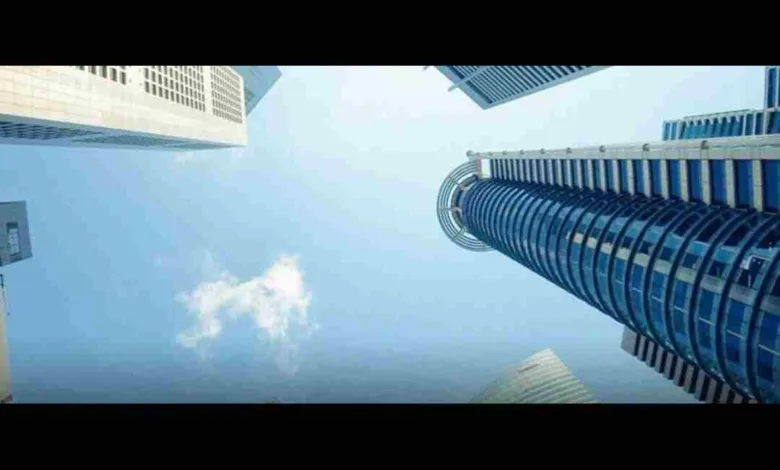
Urban Development in Pakistan is crucial for the growth of an economy. The urban cities in Pakistan are responsible for 78% of the GDP. Urban Development in Pakistan is a prerequisite for development, no country has been able to develop without urbanization. If the cities are not planned properly urbanization can lead to issues like overcrowding, developing slums, housing problems and environmental issues. Even the old cities like London show many skyscrapers.
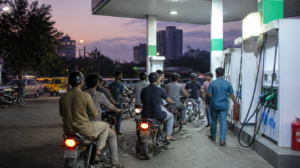
 But in Pakistan the cities are poorly planned and there are no towers in Urban cities. There a few skyscrapers and the people prefer living in housing societies which is causing more traffic and fuel consumption is increasing.
The resources are not used efficiently if the cities are scattered over a large area. People spend resources on things like fuel, electricity, and transportation. Contrary to which, living in high rise buildings is more efficient. It is not just about efficiency but also the cost of living is not extremely high, and people will have more to spend to improve their lifestyle.
It is not just about the lifestyle of people, but it might be beneficial for urban development in Pakistan. As the masses are eager to move to large cities, the already built areas are getting increasingly congested. And it is causing more traffic which is leading to bad air quality. The government has done little to nothing to grow the cities vertically which is causing deforestation to build more houses. People are not allowed to build houses more than two stories high.
To build houses there is no space left for the community areas like parks, libraries, and playgrounds. The argument given by the policy makers is that it would be hard to find parking spaces if the cities were built vertically. Have they not heard about the underground car park?
Due to lack of skyscrapers the air quality in metropolitans of Pakistan is constantly deteriorating. Specifically in Lahore the air quality is considered worse than any other city in the world. The government has always focused on building more flyovers and underpasses to decrease the traffic congestion. But it has no effectiveness. If the government had focused on better planning of public transport and high rise building this issue could have been resolved easily.
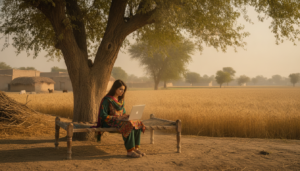
But the lack of skyscrapers has led to an increase in plot mafia. This has led to the destruction of agricultural land and forests. In 20221 many acres of mango trees were cut down to build/expand the land of DHA in Multan. This act was criticized by many, but the damage was already done. We can find many more examples where the agricultural land has been transformed into housing societies.
It will hurt the economy as 23% of GDP comes from agricultural activities in Pakistan. It could have been prevented if the government and policy, makers had focused on the vertical growth of cities. As it consumes less land, is more efficient and cheaper.
Vertical Urban Growth: Key Context & Background
This section provides additional context on vertical urban growth — including background, key players, and the Pakistani perspective that shapes our reporting on vertical urban growth.
Why need vertical urban development in Pakistan?
The population in Pakistan is increasing at a rapid pace of 2.55% per year. This is an alarming situation for any country. Due to the high population growth, the demand for housing is also increasing causing the cities to become increasingly congested and policy makers are keen not to go toward vertical growth. Also, the recent floods in rural areas have destroyed 1.1 million houses. The floods are a result of environmental change, and the destruction of agricultural land and forest has added to this change. The forests and agricultural land are being destroyed to meet housing needs. It would be better to build skyscrapers rather than destroy agricultural land and forests for housing societies.
The sludges that are restricting people to build high rise buildings needs to be removed as this is also one of the reasons that is stopping Pakistan from going toward the vertical development. Right now, it is not allowed by the local authorities to build a house that is more than 2 stories high. This has forced large families to live in small houses and due to the high housing prices, these people are not able to afford new houses.
Vertical Urban Development in Pakistan is also better for the environment as it is easy for people to access everything so fuel consumption will be low. People can even grow plants and vegetations on the top of the high-rise buildings, this will help to better the environment. In countries like Pakistan where energy is produced by fossil fuels, we need to consume less to decrease the population. And high-rise buildings are more energy efficient.
Vertical growth can solve problems like overcrowding, unaffordable prices of housing, better environment, and overpopulation. For sustainable growth it is important for a country to focus on vertical urban development in Pakistan. As every developed country has focused on vertical growth. As it provides better opportunities for employment and urbanization. It eventually leads to an elevated level of output and growth in the economy. Eventually Pakistan will have to go toward vertical growth.
The big question is whether it’s already too late or do we still have time?
Huzaifa Ahmad is currently enrolled as an MPhil student at PIDE
Related Stories on Nai Khabar
Related Stories


 Muslim Hands Commends NDMA’s Exemplary Role in Disaster ResponseDecember 10, 2023