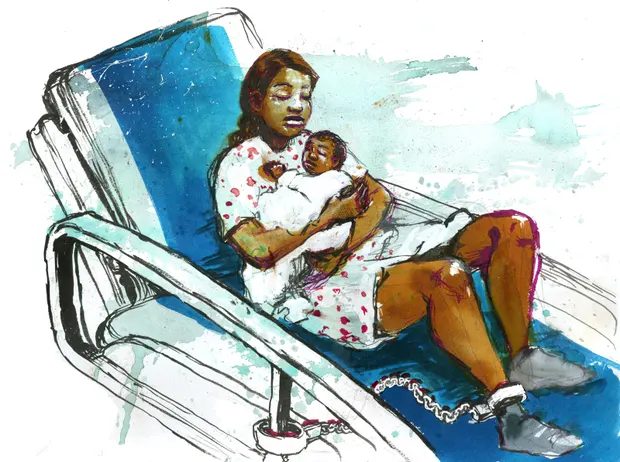
Pregnant Women Handcuffs — Pregnant Women in Handcuffs, Prisoners Face ‘Horrendous’ Treatment in Japan — full coverage and analysis on Nai Khabar. Below we break down the key facts, background context, and what this development means going forward.
International human rights organization Human Rights Watch said the Japanese female prisoners were subjected to harsh treatment. Pregnant women are handcuffed and kept away from newborns, and facilities for older prisoners are also inadequate. According to French news agency AFP, a new report from Human Rights Watch shows that women are sometimes handcuffed before and immediately after giving birth.
The report also included interviews with 60 women who were previously in prison. The report also includes the position of Japan’s Ministry of Justice, which rejects the allegations and states that “women in prison are not subject to any restrictions on breastfeeding, lifting, bathing or changing diapers of their children.”
The Ministry of Justice also stated that “all necessary medical assistance will be provided to female prisoners.” According to Human Rights Watch, mothers are often separated from their newborns.
Pregnant Women Handcuffs: Key Context & Background
This section provides additional context on pregnant women handcuffs — including background, key players, and the Pakistani perspective that shapes our reporting on pregnant women handcuffs.
“Incarcerated women face serious violations and abuses
“Incarcerated women face serious violations and abuses of their human rights. » In 2021, around 4,000 women were behind bars in Japan, most of them charged with theft and drug offences. According to Justice Department statistics, of 184 women who had children between 2011 and 2017, only three had access to their children.
The organization states that “separating a mother from her baby after birth can have negative health effects and that breastfeeding can affect the relationship between mother and child.” According to Human Rights Watch, mothers can legally protect their children for at least a year, but prison authorities rarely inform women of this right.
The Justice Department told Human Rights Watch that in Japan, pregnant inmates are taken to hospitals to give birth, but are handcuffed and handed over after leaving the delivery room. According to Human Rights Watch, this “means Japan does not respect international rules.”
Human Rights Watch spoke to inmates at
Human Rights Watch spoke to inmates at a prison in Saga, a region in southwestern Japan, and found that prisoners were handcuffed during childbirth, in violation of a 2014 government order.
According to the organization, the Ministry of Justice has denied this allegation and said that since 2014, they have no record of any woman being handcuffed during childbirth. The report also says that there are no arrangements for the increasing number of elderly prisoners in prisons, some prisoners have insufficient space, while some face bullying from fellow prisoners and guards. The number of elderly people in Japan’s prisons has increased rapidly in recent years, which is even higher
among women in prisons.
According to government statistics, in 2021, 20 per cent of women going to jail were 65 years of age or older, while the number of men was 13 per cent. According to the Organization, ‘some elderly prisoners are accused of minor crimes such as shoplifting.”
Related Stories on Nai Khabar
Related Stories
 Rolls-Royce to Slash 2,500 JobsOctober 17, 2023

 How to Turn Your White Hair Black NaturallyDecember 8, 2023